

The World Doesn't Need You to Be Superhuman. It Needs You to Be Human

The narrative is everywhere: do more, be more, achieve more. It’s the water we swim in. And for the longest time, I believed it too.
But my recent conversation with Crystal Fernando, author of Unapologetically Human, named it perfectly: “we’re not in a performance crisis. We’re in a human capacity crisis.” And the solution isn’t to push harder. It’s to fundamentally rethink how we operate.
The Trap We’ve Built for Ourselves
Here’s the uncomfortable truth: we are always comparing. Our brains are hardwired to compare upward, not downward. We don’t measure ourselves against those who have less, we compare ourselves to those who have more. This creates an artificial scarcity that has nothing to do with our actual reality.
And complexity amplifies it. These comparison circuits are on overdrive because of the higher complexity world we’re creating, constantly putting us in psychological threat. When we’re in threat mode, we shut down the very capacities we need most: creativity, empathy, innovation, and genuine connection.
The world has changed and is demanding more of us, but at the same time, our narratives and scripts and mindsets are telling us we have to do more, be more, compete more. It’s a perfect storm, a double bind where external pressure meets internal narrative, leaving us feeling perpetually inadequate no matter what we accomplish.
The Leadership Paradox Nobody Talks About
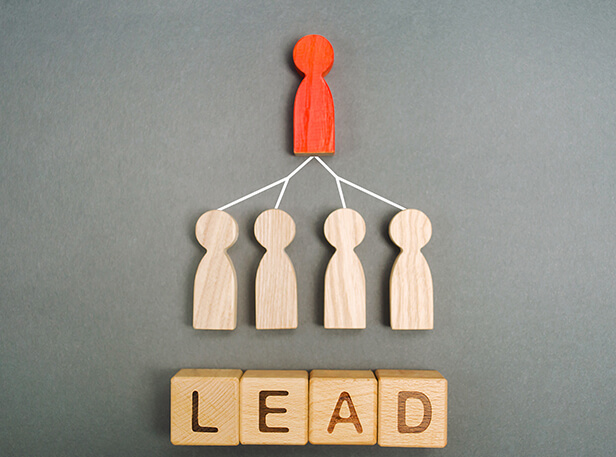
Here’s what hit me during our conversation: think of any leader you’ve looked up to who has really influenced your personal life. It’s very rarely because they were superhuman. It was because they connected to you.
When you think about your best self, those moments you’re genuinely proud of, it isn’t when you were being your least empathetic. It isn’t when you were being your least creative. Usually, we’re proudest of the moments when we were most human.
So why are we building systems, organizations, and cultures that actively discourage this?
Organizations don’t come asking for stability. They rarely say, “Come give me stability.” What they want is agility, adaptability, resilience, all the buzzwords. But here’s what they’re missing: you can’t build sustainable agility on an unstable foundation. It’s like trying to do gymnastics on quicksand.
The SIMPLE Truth About Sustainable Performance
Crystal introduced a framework that cuts through the noise. Appropriately called SIMPLE. Not simple as in easy, but as a scaffolding for how we actually thrive in complexity.
The framework recognizes something fundamental: stability before agility. The first three elements (Safety, Intention, Mindset) create the foundation. The last three (Powerful questions, Leveraging systems, Empathy) enable us to navigate complexity with power and grace.
Think about any athlete. We start with core strength. Salsa dancers need stability before they can spin. Ballerinas spot a place on the wall to maintain their center. Yet in business, we’re asking people to be agile, creative, and adaptive without first ensuring they have stable ground to stand on.
Safety isn’t about being soft. It’s about moving from protection to possibility. When leaders show up late, stressed, and unfocused, they set the weather for everyone. Your stability is contagious. So is your chaos.
Intention shifts us from distraction to purposeful direction. It’s not just about having a purpose statement. It’s about making choices aligned with what actually matters. Can you say no? Can you say “not yet”? If you can’t, you’re operating on autopilot, not with intention.
Mindset takes us from powerless to powerful. What we believe about change and complexity has everything to do with how safe we remain when another change hits. Our mindsets define our limits or our possibilities.
From this stable foundation, we can then develop genuine agility through curiosity, systems thinking, and empathy.
The Re-Skilling Moment
The world is calling us to be more creative, to be more human, to be more adaptive, to be more agile. And in order to do that, we’re going to need to re-skill, regroup, and re-tool our strategies.
Not with more productivity hacks. Not with better time management techniques. But with fundamentally different approaches to how we show up in the world.
Crystal shared a powerful story about a president of a large organization who realized she had created a culture of busyness, not intentionally, but because it was spilling out of her. In a moment of clarity and courage, she stood up in front of her top 30 leaders and said: “I am not healthy. I am busy. I’m not doing okay. And I realize I’ve done that to you, and it stops here and now.”
That moment of vulnerability, of being unapologetically human, transformed the culture. And here’s the kicker: performance followed. Not because they did more, but because they did less, more meaningfully.
The Practice: Starting Small
If you’re feeling at capacity (and let’s be honest, who isn’t?), here’s the smallest, bravest action you can take:
Create three minutes of reflection before you start your day.
Not an hour. Not a complicated morning routine. Three minutes before you pick up your phone, before you check your email, before the chaos begins.
Ask yourself two questions:
- How do I want to show up today?
- What is my most meaningful move?
That’s it. Three minutes of cracking open space for intention instead of immediately defaulting to reaction.
The most underutilized strategy in leadership today is reflection. We wake up, grab our phones, and we’re off to the races. We’re answering emails before we’re out of bed. Our kids are off to school and it’s go, go, go.
If we did nothing else but protect those three minutes of morning space, we’d start to feel the dividends of operating with intention rather than on autopilot.
The Shift We Need
This moment isn’t about being replaced by AI or the next wave of change. It’s about being released. Released from the grinding, the hustling, the belief that busy equals valuable.
We’ve lost the plot. We’ve confused activity with impact, busyness with worthiness, superhuman effort with meaningful contribution.
The path forward requires returning to the very simple core mechanics of what makes us human. The world needs us to be more creative, more adaptive, more genuinely connected. And we can’t do that from a place of constant threat, comparison, and exhaustion.
We need to stop trying to be superhuman and have the courage to be deeply, unapologetically human. That’s not the easy path. In many ways, it’s the hardest one. But it’s the only one that’s sustainable.
The question isn’t whether you can keep pushing. The question is: what becomes possible when you finally give yourself permission to stop?
Listen to my full conversation with Crystal Fernando on the Flourishing Edge podcast to learn about really practical approaches for us to thrive in this increasingly volatile and certain complex world.
Learn more about Crystal Fernando on LinkedIn.
Listen to the podcast with Ashish and Crystal Fernando below, You can also listen on Apple Podcasts.
Access and subscribe to all of the episodes of the Flourishing Edge Podcast here.
Make Flourishing Your Competitive Edge.