What If Work Felt Like Your Best Conversation?

When was the last time you left a meeting feeling genuinely energized? Not relieved it was over. Not just productive in a checkbox kind of way, but actually lit up by the quality of connection, thinking, and collaboration that happened in the room?
For many leaders I work with, that experience can be rare. And yet it doesn’t have to be.
I recently had a conversation with John Betancourt, founder and CEO of Humantelligence and creator of Ask Aura. John spent 15 years interviewing over 5,000 C-suite leaders through executive search at Korn Ferry and Heidrick & Struggles. He has built his life’s work around a deceptively simple premise: when people truly understand each other, their behaviors, their motivators, how they like to work and communicate, everything changes. Teams stop fighting the same battles. Meetings stop wasting everyone’s time. People stop feeling invisible.
Our conversation kept returning to one uncomfortable truth: most of the friction, wasted energy, and missed potential in our workplaces traces back to how poorly we understand each other.
Imagine a Different Kind of Meeting
Imagine laying out your agenda differently based on what would genuinely engage each person in the room. Presenting conceptually to the big-picture thinkers and with detail to the ones who need data before they can commit. Knowing in advance who isn’t going to speak up – not because they have nothing to say, but because that’s not how they’re wired – and intentionally drawing them out. Knowing who’s likely to hit heads with whom, and preparing for it rather than being ambushed by it. And instead of asking at the end of the meeting “who wants to take what?”, actually knowing going in who is the best person for each task and assigning work in a way that aligns with how people think, what energizes them, and where they naturally excel.
That’s not a fantasy. That’s what becomes possible when leaders treat understanding people as a core discipline rather than a soft afterthought.
Right now, research tells us that somewhere between 30 and 50% of time in meetings is considered wasted. Not by disengaged employees, by people who genuinely want to contribute but find themselves in environments that weren’t designed with them in mind. That’s an enormous human and business cost. And it’s largely invisible because we’ve normalized it.
We All Come to Problems Differently
Here is something John said that I keep coming back to. At Wharton, surrounded by high-achieving peers who had each succeeded by doing things their own way, the friction when they were put on teams together was immediate and intense. His insight from that experience was simple: we all come to problems with different ways of solving them.

On one hand, that’s beautiful. Diverse thinking is what allows teams to tackle complex problems that a room full of identical minds never could. But, and John put it plainly, if you don’t know how to manage those differences from a team dynamics standpoint, it will be a train wreck for everyone involved, and no problem will be solved.
This is the paradox at the heart of so many teams. The very diversity that could be their greatest strength becomes their biggest source of friction, because no one has given them a shared language for understanding each other. The decisive person steamrolls the deliberate one. The conceptual thinker loses the detail-oriented one. The introvert gets drowned out. And everyone walks away feeling a little less seen and a lot more tired.
The Cost We Don’t Measure
In my work on flourishing, the PEARL model – Purpose, Energy, Adaptability, Relationships, and Life Force – is a lens for what it means to truly thrive at work, not just perform.
When I think about communication through that lens, the picture gets sobering fast.
Imagine if the way we communicate at work actually energized us rather than drained us. Imagine if we could be genuinely adaptable not just in strategy, but in how we show up to each conversation, adjusting to the person in front of us. Imagine workplaces where people feel a real sense of belonging, not because everyone looks or thinks the same, but because they feel understood. Where psychological safety isn’t a poster on the wall but a lived daily experience. Where we’re not lurching from back-to-back meetings in a way that leaves our nervous systems fried, but working in ways that are neuro-friendly, intentional, and human.
Right now, 60% of employees report experiencing stress daily. Only 20% say they’re truly thriving. Twenty-two percent are burnt out. These aren’t statistics about disengaged people. These are statistics about people who are trying hard in systems that weren’t designed for how human beings actually work.
Communication, the way we understand each other, or fail to, sits right at the center of this.
Three Awareness Blind Spots Every Leader Must Address
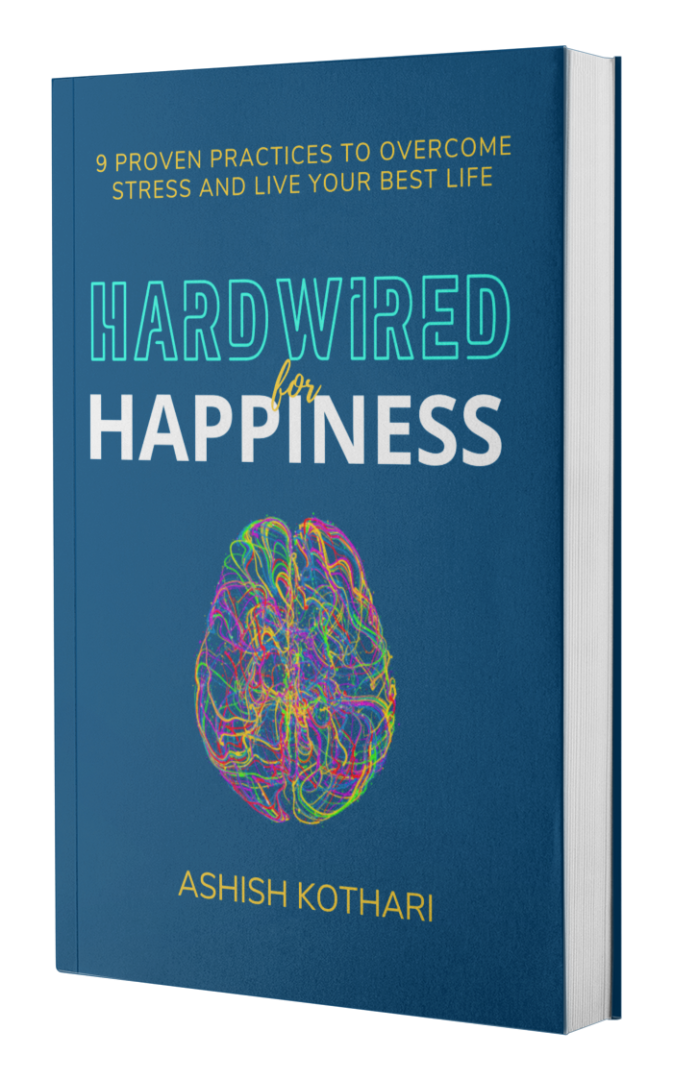
So how do we close the gap? In my book Hardwired for Happiness, I write about awareness as the central practice, not peripheral, not optional, but foundational. And from my conversation with John, I want to name three specific blind spots that keep even well-intentioned leaders stuck.

The first is not knowing who you are. Beyond your title, your résumé, your achievements. What actually drives you? What are your non-negotiables? What defaults are running in the background shaping your every decision? Research by Tasha Eurich shows only 15% of leaders are truly self-aware which means the vast majority are leading from an operating system they’ve never examined.
Try this:
- Dedicate ten minutes daily to stillness. Listen inward rather than outward
- Identify your three core non-negotiable values and notice when decisions honor or violate them
- Ask a trusted mentor not just what you do, but why they think you do it
The second is not recognizing the lens you’re looking through. Anaïs Nin said it perfectly: “we see the world as we are, not as the world is”. Your beliefs, your past experiences, the stories you’ve accumulated, they shape your reality in ways you may not even notice. Two people can sit in the same meeting and have completely different experiences of what just happened.
Try this:
- When you feel a strong reaction, irritation, defensiveness, dismissal, pause and ask: what belief is making me see this as a threat right now?
- Before forming a judgment, actively seek out how someone else on your team might be experiencing the same situation
- Practice naming the assumption behind your conclusion before acting on it
The third, and hardest, is not knowing how you’re being misperceived. This is the rarest form of self-awareness and perhaps the most consequential. John’s favorite question from his executive search days wasn’t “what’s your weakness?” He would ask: “How are you misperceived, and what is it about you that creates that impression?” Because people don’t tell you how they’re experiencing you. You have to develop the sensitivity to see it yourself.
John shared a powerful story. He was interviewing a woman for a CFO role at a demanding client. Throughout the conversation, her style was measured and gracious and he was privately concluding she wasn’t tough enough for the job. Then he asked his misperception question. She said, “People think I’m too gentle to be a fire breather, but I’m not.” And in the next three minutes, she proved it. If he hadn’t asked, a brilliant leader would have been passed over because of a gap between how she came across and who she actually was.
How many times is that happening on your team? In your most important relationships?
Try this:
- Regularly ask trusted colleagues: “How am I sometimes misperceived, and what do I do that creates that impression?”
- When you know you come across in a particular way, lead with your intent: “I’m being direct here for clarity, not criticism”
- Use a Mood Meter at the start of meetings. A simple check-in on how each person is doing as a human being before diving into business. It opens the door to compassion, and often reveals what the real agenda needs to be
Bringing It All to Life: What John Has Built
John’s work is very exciting to me.
Most psychometric tools stop at self-awareness. You get a report, attend a workshop, and three months later no one remembers their results, let alone anyone else’s. John saw this problem clearly and built something different. Humantelligence measures behaviors, motivators, values, and work energizers, all in under ten minutes, and is accessible enough to roll out across an entire organization. That matters because culture isn’t what you put on your website. It’s the aggregated values and ways of working of every single person in your company, and you can’t shift what you can’t see.
The real breakthrough is Ask Aura, the AI layer woven into your daily workflow. Imagine asking Aura to rewrite an email in the communication style of the person receiving it. Imagine opening your calendar before a meeting and seeing the behavioral dynamics of the room, who will push back, who won’t speak unless invited, how to draw out the best thinking from everyone. What John has pioneered is, at its heart, a way to make workplaces more human through technology not to replace judgment, but to give it a far stronger foundation.
I believe we are at an inflection point. The leaders and organizations that will flourish in the years ahead won’t just be the ones with the best strategy or the most resources. They’ll be the ones who figured out how to truly understand each other and built cultures where that understanding is practiced every single day.
Because when people feel genuinely seen, something shifts. Work stops feeling like a drain. Meetings stop feeling like a waste. And the energy that was locked up in friction and misunderstanding gets released into the thing it was always meant to fuel: doing meaningful work, together.
Learn more about John Betancourt on LinkedIn.
Listen to the podcast with Ashish and John Betancourt, on Apple Podcasts.
Access and subscribe to all of the episodes of the Flourishing Edge Podcast here.
Make Flourishing Your Competitive Edge.