Is Your Workplace Making People Sick?
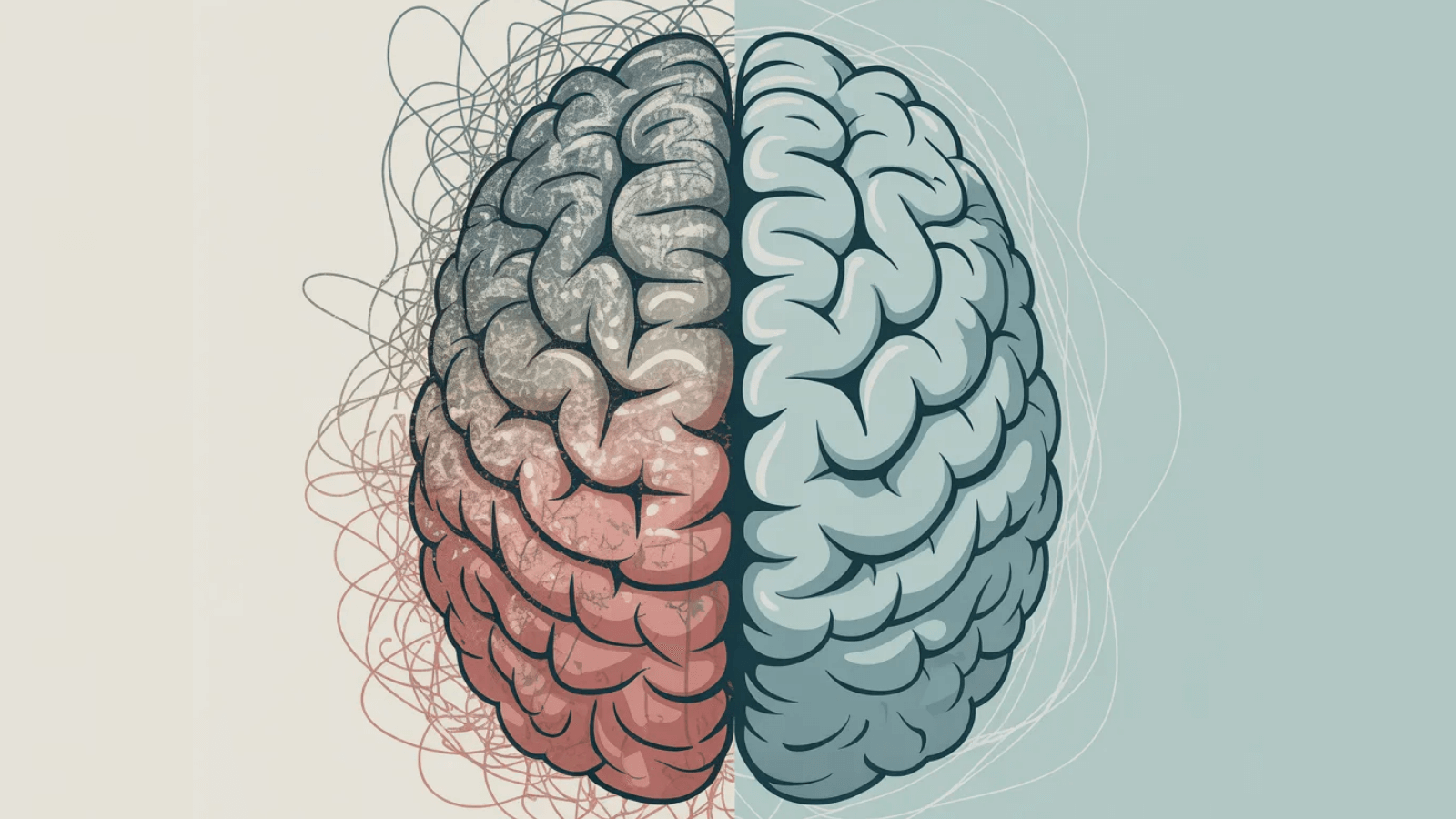
I recently had a conversation with Jacqueline Oliveira-Cella that brought together two threads I’ve been exploring: how our brains are hardwired for connection and flourishing, and how the systems we design at work either support or sabotage that wiring.
Jacqueline isn’t your typical wellness expert. She’s an actuary with over 25 years of experience who has spent her career measuring risk: health risk, disability risk, mortality risk. But in our conversation, she pointed to a risk that’s systematically overlooked in most organizations: cultural risk.
“We measure risk per body parts,” she told me. “Health, disability, death, longevity. But the risk that’s often overlooked is the culture. The container, the organization that someone is working within.”
This is exactly what I’ve been seeing in my work with organizations through our programs. Organizations focus so much on individual interventions, mindfulness apps, gym membership, wellness programs, while ignoring the container people spend most of their waking hours in. What if the biggest health risk your employees face isn’t genetic predisposition or lifestyle choices, but the very systems you’ve designed for them to work within?
The Tale of Two Companies
Jacqueline painted a vivid picture that perfectly captures what I see when I work with different organizations.
Imagine Company A and Company B. Same demographics. For simplicity’s sake, let’s say the exact same people.
In Company A, people have space to create and flow. Managers act as coaches and uplifters, helping close learning gaps and making people feel they matter. Yes, there’s high pressure, but it exists within a supportive container.
In Company B, the pressure is the same. But leadership operates with a “do as I say, stay in your lane” mentality. Innovation is discouraged. Performance is expected as an obligation, not celebrated as contribution. Recognition comes only after relentless output, maybe.
“Company A enables flourishing,” Jacqueline explained. “It enables someone to be at their best self, producing and connecting with others meaningfully. Company B is likely driving people towards illness, towards physical illness, if not out of the company altogether.”
This isn’t philosophical speculation. This is actuarial insight backed by decades of health data. And it aligns perfectly with what neuroscience tells us: our brains need safety, connection, and autonomy to function optimally. When those conditions are absent, we don’t just perform poorly, we literally make ourselves sick.
When Healthcare Costs Tell a Deeper Story
If you were talking to a CEO about why flourishing matters, how would you help them think about it as a key strategy to invest in?
Here is Jacqueline’s answer which gets to the heart of why this matters financially, not just ethically.

When CFOs look at rising healthcare costs in the U.S., the instinct is to pull the same old levers. Shift costs to employees. Negotiate with vendors. Add more wellness programs. But Jacqueline’s research points to a fundamentally different question: What if your rising healthcare costs are actually a culture problem?
As I reflected back to her: “Healthcare costs are going up. Many CFOs want to think about their employee base and what resources to provide them. But your research and your invitation is to say – don’t just look at healthcare costs as something to do with people and who you’re hiring. Think about the systems you’re putting them in. Because those systems will be a big driver for whether people are flourishing, being at their best, driving higher performance, lowering healthcare costs or whether they’re burning out or at higher risk of ailments because they’re fundamentally operating in environments that constrain them, that put people in survival mode rather than thriving mode.”
Jacqueline isn’t dismissing the value of employee benefits. When well-designed, they matter. “They are protection. They serve as remedy,” she told me. But benefits alone can’t fix a broken system.
“If you can combine benefits with an environment where people can flourish, with an anti-inflammatory environment, you have the opportunity to actually leverage your offerings,” she said.
Medical inflation is expected to hit double digits in 2026. Employers will respond predictably with cost-shifting or, in better cases, long-term preventive care. But Jacqueline is inviting us to consider an untapped lever: How things get done.
This is the notion I’ve been emphasizing in my work: If your costs are going up, look at your culture and see if moves you can make in how things get done can actually be an untapped lever you’re not pulling, so you can go more into preventative rather than after-the-fact giving people resources they need to protect them when they’re sick.
The Inflammation Connection
This is where Jacqueline’s framework gets brilliantly simple and uncomfortably revealing.
She was recently at the Women’s Health International Summit, leading a panel on food as medicine. She brought together an endocrinologist, a gut health expert, and a biomolecular doctor specializing in food. As she studied the physiology connecting hormonal flow, mental health, and gut health, one concept unified everything: inflammation.
“Our bodies are overworking to fight a threat,” she explained. “When you think about organizations that are inflammatory, we as individuals are fighting, wasting our energy to fight what? To fight systems that are threatening us, creating fear or stress.”
Not just any stress. Overwhelming stress. The kind that paralyzes you.
This connection is crucial. It’s not just a mental health issue, it’s a physical issue. When you’re operating in environments of high stress where you constantly feel threatened, where psychological safety is absent, where conflicts leave you drained, you’re putting your body into constant fight-flight-freeze mode.
That causes inflammation. And inflammation is the precursor to metabolic disorders, cardiovascular disease, gastrointestinal issues, chronic pain, all the conditions driving up healthcare costs.
As I noted in our conversation: “60% of people today experience stress daily. 22% are burnt out. And this isn’t just a mental health issue, it’s actually physiological.
When you’re operating in environments of high stress where you constantly feel threatened, where you don’t feel psychologically safe, where conflicts at work leave you drained, you’re doing something profound to your body. Because you spend so much of your time at work, you are putting yourself and your body into a constant state of fight-flight-freeze.
That chronic activation causes inflammation. And that inflammation becomes the precursor to metabolic disorders, cardiovascular disease, and a cascade of other chronic conditions.”
And then companies end up paying for it indirectly because they have a sicker population; forget about the impact on performance, creativity, and innovation.
By framing it as “Is your workplace inflammatory or anti-inflammatory?” Jacqueline brings into sharp focus what many of us have sensed but couldn’t name: The workplaces we’re creating are amplifying human suffering rather than human flourishing.
The Manager Problem No One Wants to Name
Gallup’s flourishing research reports engagement is trending down year over year, correlating to over $430 billion in lost productivity.
But here’s the kicker: Disengagement is even higher among managers.
This matters because managers are the keynote speakers for cultural norms. They represent ways of working. How they operate, whether they uplift or constrain people, whether they coach or control, they are disseminating culture every single day.
Trust in direct managers has decreased from 46% to 29% over the last two years. That’s not just about individual managers. It’s a systemic issue.
And here’s the pattern we’ve normalized: You’re good at your job. You get promoted. You become a manager. No training.
“I’ve asked this so many times,” Jacqueline said. “The training comes after you become a manager or when there is an issue.”
We’re promoting people into the most culturally influential roles in our organizations and then acting surprised when stress spreads like wildfire.
Building Anti-Inflammatory Workplaces
So what do we do?
Here are several practical levers:
Reward collaboration, not competition: Stop creating cannibalistic competition between teams. Stop pitting people against each other in ways that erode trust.
Train managers to be coaches, not task managers: This isn’t a nice-to-have. It’s infrastructure.
Build in reflection: Create space for people to pause and think about how decisions are made, rather than constantly operating in reactive mode. Moving from pressure to presence is powerful.
“Just space to reflect itself is a big deal. What you reflect on is up to you. But rather than constantly be in react mode, creating space for reflection and choiceful response can be a massive lift.”
As Daniel Goleman’s research shows, 92% of what separates star performers from their peers is related to emotional intelligence. It’s not technical skill. It’s the capacity to regulate, reflect, and respond rather than react.
The system needs to be adjusted. Benefits show care and protection. But as Jacqueline emphasized, it needs to start with the individual.
The SAFE Framework: Personal Agency in Broken Systems
Jaqueline created a protocol called SAFE, a four-part framework to build emotional intelligence and clarity, especially when emotions might cloud judgment.

S – Set your intentions. What do I want from this situation?
A – Acknowledge facts, emotions, and needs. What actually happened versus what I’m telling myself?
F – Frame, reframe, and focus. What story am I telling myself? Is it true? What else might be happening?
E – Execute micro-steps. What’s one small action I can take right now?
As I reflected back to Jaqueline: “This is a powerful way for individuals to take agency. Don’t wait for the team or organization, you can shift from judgment to observation, from blame to curiosity.”
Jaqueline built this into SAFE Now. This is a custom GPT accessible to anyone with a ChatGPT account. In six weeks, there have been 300 conversations. One surgeon called it “an emotional intelligence layer to my decision-making process.”
As Jaqueline notes, no tool replaces human connection. It’s a resource for when you need to reflect and don’t have immediate access to another human.
What I’m Taking From This
Jaqueline’s work reminds me that sustainable change requires both systemic shifts and individual agency.
We can’t wait for organizations to become less inflammatory before we start building our own capacity to regulate, reflect, and respond. At the same time, we can’t put the burden entirely on individuals to be resilient within fundamentally broken systems.
The invitation is both/and.
As a manager, you can be the medicine for someone, as Jaqueline beautifully put it.
As an individual, you can start taking agency shifting from judgment to observation, from blame to curiosity, through powerful self-reflection.
And as organizations, we can finally acknowledge that rising healthcare costs, disengagement, and burnout aren’t just people problems, they’re systems problems.
The question isn’t whether we can afford to build anti-inflammatory workplaces.
The question is: Can we afford not to?
Learn more about Jacqueline Oliveria-Cella on LinkedIn.
Listen to the podcast with Ashish and Jacqueline Oliveria-Cella below, You can also listen on Apple Podcasts.
Access and subscribe to all of the episodes of the Flourishing Edge Podcast here.
Make Flourishing Your Competitive Edge.