Signs of Workplace Burnout: When Balance Backfires

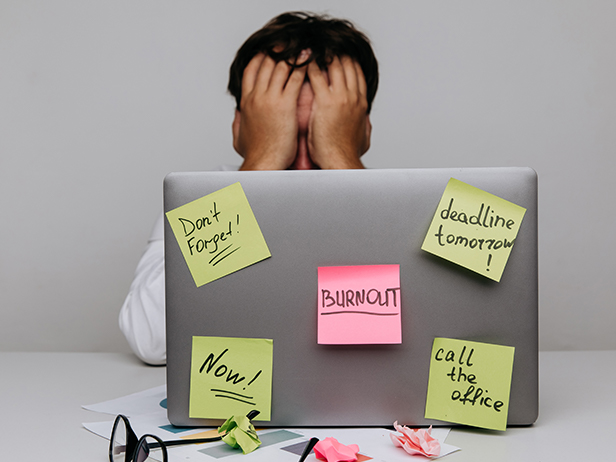
Your best manager just submitted another request for PTO. The third one this quarter.
You remember when they first joined your team three years ago—how they’d light up the room in every meeting, how they’d stay late not because they had to, but because they genuinely cared about mentoring their direct reports. They were the one everyone wanted to work with. The one who made hard problems feel solvable.
You’ve seen this pattern before. The slow fade. The quiet withdrawal. And if you had to guess, you’re wondering: What are we missing?
Here’s what the data won’t quite tell you, but your gut already knows. The signs of workplace burnout you’re seeing aren’t just about people working too hard. They’re symptoms of something deeper. Something our entire approach to work-life balance has gotten fundamentally wrong.
The Burnout Numbers That Should Wake Us Up
Let me share some statistics with you.
82% of employees were at risk of burnout in 2025. Not just experiencing burnout, but at risk. That’s four out of every five people in your organization teetering on the edge.
Forrester’s research commissioned by Spring Health found 65% of employees report being as stressed or more stressed than five years ago. And here’s the issue: burned-out employees are 2.8 times more likely to be actively searching for a new job.
Your retention problem? It’s a burnout problem.
But let’s dig deeper into what burnout actually looks like, because the signs are often hiding in plain sight.
The Signs We’re Trained to Miss
The obvious signs of workplace burnout are well known: increased absenteeism, missed deadlines, visible exhaustion. And yes, those matter.
But the World Health Organization defines burnout through three distinct dimensions that are far more subtle: exhaustion, cynicism, and reduced professional efficacy. It’s that middle one, cynicism, that we often overlook.
Eagle Hill Consulting’s 2025 Workforce Burnout Survey revealed something telling. They found 51% of U.S. workers experiencing burnout, but here’s what stood out: only 42% of those burned-out employees told their managers. And of those who did speak up? 42% said their manager took no action.
Think about that for a moment. Your people are struggling, trying to signal for help, and the message isn’t getting through. Or worse, it’s being ignored.
The signs of workplace burnout you should be watching for include:
- The colleague who stops participating in team discussions (detachment)
- The once-creative employee who now just goes through the motions (reduced efficacy)
- The person who’s “fine” but no longer seems present (emotional exhaustion)
- Team members who used to collaborate now working in isolation (cynicism)
- The subtle shift from engagement to just getting through the day
These aren’t just individual struggles. Gallup’s data showed 41% of employees worldwide feeling “a lot of stress” each day. In the U.S., we’re among the highest-stress economies. When that many people are suffering, we’re not looking at a people problem. We’re looking at a systems problem.
The Hidden Culprit: The Balance We’re Chasing
Now here’s where things get interesting, and where most wellbeing programs miss the mark entirely.

We’ve built an entire industry around work-life balance. Programs designed to help people separate their work selves from their life selves. Strategies to “leave work at work.” Tools to create boundaries between professional and personal.
But what if that very separation is part of what’s burning people out?
Think about it this way: we never talk about life-family balance or life-friends balance. We don’t try to balance cooking dinner with taking the kids to practice. They’re all just life.
So why do we draw such a stark line between “work” and “life”?
Somewhere along the way, we started treating work as suffering and life as relief. Work became something we needed to recover from. That separation, reinforced by decades of corporate policy and language, has fractured how we think about ourselves.
And that fracture? It’s exhausting.
What the Research on Integration Reveals
Recent data from Wellhub’s State of Work-Life Wellness report shows 95% of employees believe physical, mental, emotional, and social wellbeing are interconnected. Not separate. Not balanced. Interconnected.
Yet our burnout prevention programs often miss this. We offer gym memberships for physical health, EAPs for mental health, financial wellness programs, and social events, all as separate initiatives. We’re trying to solve an integration problem with a separation strategy.
The result? 61% of employees with structured wellness programs report good or thriving wellbeing, compared to just 40% without programs. That’s progress, sure. But it also means 39% of people with access to wellness programs still aren’t thriving.
Because the programs are treating symptoms, not the root cause.
The Trust Factor Nobody’s Measuring
Trust is the single most under-measured driver of flourishing. When you look at the signs of workplace burnout through this lens, everything shifts.
Burnout isn’t just about workload. It’s about working in environments where you can’t bring your whole self. Where trust is so low that people don’t even tell their managers they’re struggling.
The hybrid work debate? It’s not really about productivity. It’s about trust. Where trust is absent, micromanagement thrives. Disengagement spreads. And burnout follows like a shadow.
The Generational Divide That’s Screaming for Attention
If you’re wondering why your retention numbers look different across age groups, the burnout data tells a stark story.
Eagle Hill Consulting found burnout rates highest among Gen Z at 66%, followed by millennials at 58%, Gen X at 53%, and baby boomers at 37%.
But here’s what’s even more revealing: the average American experiences peak burnout at 42 years old. Gen Z and millennial workers? They reported reaching peak stress at just 25 years old.
They’re burning out 17 years earlier than previous generations.
Why? Because younger workers refuse to accept the separation narrative. They grew up questioning the idea that work should consume their identity. They’re looking for integration, for wholeness, for work that fits into a full life rather than replacing it.
And when they encounter systems built on the old balance model (where work and life are adversaries competing for time), they burn out faster because the cognitive dissonance is unbearable.
What Actually Prevents Burnout
If balance isn’t the answer, what is? Integration.
Companies with structured wellbeing programs see 25-40% lower turnover rates. But the most effective programs aren’t the ones with the most benefits. They’re the ones that help people see work as part of a whole life.
Here’s the shift: instead of measuring 100 things once a year, measure 5 things frequently and act fast. That simplicity matters.
Spring Health’s research shows employees experiencing burnout have a 57% increased risk of workplace absence greater than two weeks. Companies lose between $4,000 and $21,000 per employee replaced due to burnout. For a 1,000-person organization, that’s roughly $5 million annually.
Throwing more balance programs at an integration problem just adds to the overwhelm.
Three Questions Every Leader Should Be Asking
Here’s where to start:
What does a day of wholeness look like for our people? Not balance. Wholeness. Design work around energy, not just tasks. Where do people feel most alive? Who replenishes them? Build systems around that.
How can we integrate work, relationships, and purpose so they feed each other? Look for overlaps. Projects that use people’s strengths to serve others. Moments where mentoring, learning, or collaboration bring meaning beyond metrics.
Where can we bring more intentionality, not separation, into how we work? Small rituals matter. Mindful pauses before meetings. Gratitude practices. Ten-minute walks between transitions. Integration is built one intentional act at a time.
The Path Forward
The signs of workplace burnout you’re seeing aren’t just warning lights. They’re your people telling you the old model isn’t working.
We can’t keep treating work as something to be balanced against life. We can’t keep asking people to fragment themselves.
89% of employees perform better when they prioritize their wellbeing as a whole. Not work wellbeing versus life wellbeing. Just wellbeing. As one integrated human being.
The organizations that will thrive aren’t the ones with the best balance programs. They’re the ones creating conditions for people to show up whole.
That means building trust, not surveillance systems. Creating flexibility based on energy and purpose, not rigid boundaries. Measuring the few things that matter, not everything that can be measured.
Burnout isn’t a personal failure. It’s a design failure. And the design we need to fix isn’t just workload or benefits. It’s the fundamental assumption that work and life are separate entities.
You are not two selves. You are one whole being, living one whole life.
The next time you’re reviewing burnout metrics, ask yourself: Are we trying to help people balance competing selves? Or are we creating conditions for them to flourish as the whole humans they already are?
Your answer will determine whether your wellbeing programs become another thing people have to manage, or the foundation that allows them to thrive.
Learn more about Ashish on LinkedIn.
Access and subscribe to all of the episodes of the Flourishing Edge Podcast here.
Make Flourishing Your Competitive Edge.