What Leading in Chaos Actually Requires

Leaders spend 60-70% of their time in meetings. And 60-70% of people will tell you those meetings are ineffective.
We keep running this madness anyway. More meetings, more speed, more effort.
I’ve believed for years that this is not a productivity problem. It’s a presence problem. In a recent conversation on the Flourishing Edge podcast, two of my dearest teachers confirmed it with more depth and precision than I’ve heard anywhere else.
Amy Elizabeth Fox is the CEO of Mobius Executive Leadership and a pioneer in bringing trauma-informed development into the executive suite. Nicholas Janni, co-founder of Matrix Development, teaches at two of the world’s leading business schools. Together they’ve written a new book, Leading in Chaos, that I found to be like water to a parched throat in the desert.
I owe these two a personal debt. A week in Portugal with Amy’s program years ago lit the flame that became Happiness Squad. So this conversation felt like coming home to a shared conviction: the way we’ve been taught to lead is collapsing, and something far more human is being asked of us.
This Crisis Really Is Different
People say we’ve been in crisis before.
We’ve had wars, ecological disasters, economic shocks, social upheaval. But we’ve never had all of them at once, across one interconnected civilization, layered on top of an AI revolution that is redefining what it means to be human.
Amy named the trap directly. We have made thinking and doing the measure of a person’s worth.
Her phrase for it is “the coinage of the realm.” Intellect and effort are the currency we spend to prove we deserve a seat. Be the smartest one in the room. Be the hardest working one. That is how most of us learned to earn our place.
The problem is obvious once you say it out loud. If your value rests on thinking and doing, you have built your identity on the two things machines are getting better at every month.
What machines cannot copy is how we are with each other. Presence. Consciousness. The ability to feel what another person is feeling and respond to it.

Amy’s challenge to leaders follows from that. Organizations will have to start valuing the whole of human intelligence, not just the part that fits in a spreadsheet.
That was the bet I made when I left McKinsey. Our humanity is not the soft stuff. In a world of accelerating machines, it is the last durable edge.
Four things kept surfacing in our conversation, and none of them are what business school taught us to look for.
- Sense-Making Is Not a Thinking Exercise
The first is sense-making, though not the version most of us were trained in.
“Sense-making invites us to perceive many more dimensions of reality,” Nicholas told me, “to know the world in a way that includes our thinking, but is much bigger than our thinking.”
That means intuiting the world. Feeling it through the body and the heart. Sitting in unknowing long enough for a higher intelligence to start flowing, instead of grabbing the first answer that quiets our anxiety.
It can no longer be a solo act. Amy was emphatic: the picture is too swirling and interdependent for any one mind. Sense-making has to become distributive. Teams that slow down, listen deeply, and scan the periphery for early signals will catch what the lone expert with a stance of certainty never sees.
Nicholas loves Einstein’s question: is your mind your master or your servant? In roughly 95% of the leaders he works with, the mind has become the master. We think our way through the day, using the mind, as he put it, in order not to feel.
The invitation is not to abandon the intellect. It’s to put it back in its rightful place, as one extraordinary instrument among several.
- Fear Doesn’t Block You. You Block Fear
The heart of this conversation, literally and figuratively, was emotion.
Amy explained what decades of trauma work have taught her: it is physiologically impossible to check your emotions at the door. What we actually do is hack them, break contact with ourselves, and live behind what most leaders she works with describe as a wall or a mask.
Then she shared a moment I can’t forget. A leader came up to her at the end of a program and said: “Thank you for helping me to cry the tears I walked with for 63 years.”
Her conclusion stopped the conversation for me:
We’re trying to make wise decisions functioning on a lake of frozen tears.”
When stress rises, those frozen tears don’t stay frozen. Unfelt feelings get triggered, and leaders swing into overdrive – aggressive, rigid, domineering – or others withdraw and go silent. Both are deadly for team dynamics, innovation, and judgment.
Nicholas offered a reframe that I think every leader should keep somewhere visible:
Fear doesn’t block me. The problem is I block fear.”
The fear was never the obstacle. The energy we spend holding it down is the obstacle.
No emotion is good or bad. Each one is information, and each one is meant to move. When you let anxiety travel through your body instead of clamping down on it, you do not fall apart. What arrives on the other side is openness and presence.
The same principle explains something Nicholas said that stopped me. We now send leaders to workshops to learn empathy. Caring about the person across from you is standard human equipment. Needing a class for it tells us how far we have drifted from ourselves.
This is exactly what I teach in REWIRE. Emotional mastery is not about controlling what you feel. It is about restoring the flow that makes clear thinking possible. Nicholas put it: “critical thinking is at its highest level when our system is in flow.”
- The Times Are Urgent. Slow Down
The next competency sounds almost offensive to a busy executive: spaciousness.
Nicholas:
Until we slow down, we cannot go really fast without being some kind of headless chicken.”
Amy commented that the times are urgent, we must slow down. We are moving at a velocity that is unnatural; no rhythm of wholeness, connection, or soul and then wondering why our impact is dispersed.
Nicholas said the black letters and the white page. We fixate on the letters, the tasks, the noise, the urgent, while the white page, the stillness underneath everything, is always there. In meetings. In the noisiest street. Available the moment we notice.
I often say we have to quieten the noise in our heads to listen to the whispers of the universe. The science agrees with the sages here: our best ideas arrive in receptive, relaxed states. Einstein said as much about his own breakthroughs.
Practically, this is the easiest place to start. Attend to the sensations of your breath. Soften each out-breath. Feel your feet on the floor and the chair holding you. Nicholas has guided thousands of senior leaders through exactly this, and it reliably shifts the nervous system and the brainwave state in minutes.
- Humility Is Occupying the Right Space
I loved how the book reframes humility. It is not playing small. Drawing on Thomas Huebl, Amy described it as occupying the right space for what is being called of you neither too big nor too small.
Shaky self-esteem, she explained through Terry Real’s lens, sends us one-up into arrogance or one-down into shame. Real humility is standing in the unique blessing that you are and taking up your full wingspan, with your ego untethered from controlling outcomes.
Her orchestra image says it all:
Each person occupying their instrument of the orchestra is how the symphony happens. We need everybody’s music.”
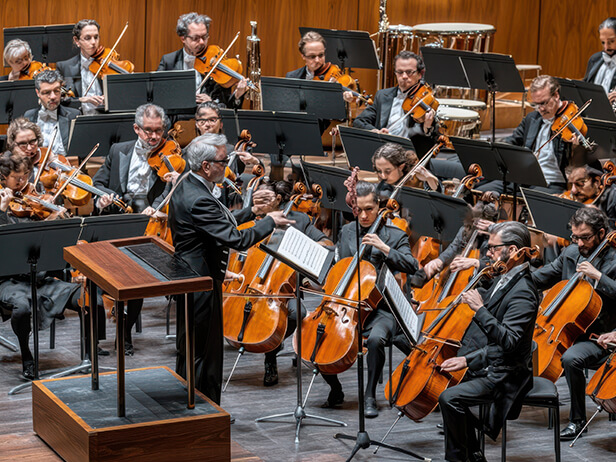
In chaos, humility gets tactical. No leader can credibly play the all-knowing visionary anymore. Everybody already knows you don’t know. The leaders who can say “I don’t know, but collectively we can find out” are the ones whose teams can experiment, fail developmentally, and adapt. Amy’s warning was blunt: leaders acting from puffed-up confidence won’t fail developmentally. They’ll fail colossally.
You Have to Be Somebody Before You Can Be Nobody.
We’re spending ~$6 trillion a year on wellness, and most of it is still organized around “I” — my sleep score, my recovery, my optimization.
Nicholas pointed to something deeper with a phrase from the 1960s: you have to be a somebody before you can be a nobody. Do the integration work, the trauma healing, the emotional opening, and a natural widening follows, where we find ourselves part of a much bigger field. Not self-improvement, transformation.
Amy added the resource we forget: beauty. Places of serenity, art, nature, poetry, wherever you find uplift, are not luxuries, they are how we refuel for what Francis Weller calls the long dark, the sustained work of social and spiritual repair ahead of us.
That, ultimately, is what Leading in Chaos calls us to: not another set of techniques, but a dance of healing and awakening, for ourselves, our organizations, our ancestors, and the future of life.
Where to Begin
Start smaller than you think. Once a day, soften your out-breath and feel your feet. In your next tense meeting, name what you’re actually feeling with one precise word. Ask your team a question you don’t know the answer to, and sit in the unknowing together for two full minutes before anyone fixes anything. Protect one block of spacious, unplugged time this week and treat it as load-bearing.
None of this requires a program or permission. It requires willingness, to feel more, to slow down, to take up your right space.
If this conversation speaks to something in you, listen to the full episode with Amy Elizabeth Fox and Nicholas Janni on the Flourishing Edge podcast.
Learn more about Amy Elizabeth Fox and Nicholas Janni on LinkedIn.
Listen to the podcast with Ashish, Amy Elizabeth Fox and Nicholas Janni. above, You can also listen on Apple Podcasts.
Access and subscribe to all of the episodes of the Flourishing Edge Podcast here.
Make Flourishing Your Competitive Edge.