How the FLOW Framework Transforms Leadership

I have spent years talking about flourishing, the science of it, the practice of it, the way it shows up at 6 a.m. when your alarm goes off and you have to decide what kind of leader you will be today. And every so often, a conversation sharpens something that matters deeply, not because it is new, but because it is said with such clarity that it deserves to be said again. My conversation with Pauline Leung was one of those.
Pauline is a former senior leader at L’Oreal, a high-performance coach, a yoga teacher, and a holistic health practitioner. She spent over a decade navigating the highest-pressure corridors of a global beauty company before transitioning into coaching leaders to perform without burning out. What she brings to this conversation is rare, not theory, but embodied experience. She has lived the tension between achievement and presence, and she found her way through it.
One of the most important distinctions in this space is one that Pauline articulates with precision: mindfulness is not meditation. They are not the same thing and confusing them may be exactly why so many leaders dismiss one of the most powerful tools available to them.
The Distinction That Changes Everything
Here is the confusion most of us carry: we hear the word mindfulness and we picture someone sitting cross-legged on a cushion, eyes closed, breathing deliberately. That is normally meditation.
Mindfulness is something different. It is a moment-to-moment awareness of your thoughts, your triggers, your body sensations, what is happening around you, and how others are affecting your energy. It does not require stillness. It does not require a cushion or a timer. It requires only a decision, a conscious choice to be present to what is actually happening, rather than lost inside the noise of your own mental story.
I have a 30-minute morning meditation practice that I have maintained for years. But the invitation I make is not to meditate necessarily, it is to start your day mindfully, which means starting it present. Those are different asks.
Jon Kabat-Zinn, who brought mindfulness into Western medicine and whose definition has shaped how millions of people understand this practice, described mindfulness as paying attention, on purpose, in the present moment, non-judgmentally. Non-judgment means observing what is happening, your thoughts, your reactions, the tension in your shoulders before a difficult meeting, without immediately labeling it good or bad, right or wrong. It means creating just enough space between stimulus and response to actually choose. This is the hardest discipline most leaders will ever attempt.
Consciousness, A Performance Lever
Pauline made a case I want every skeptic to sit with. She said the root cause of so much leadership failure is not skill deficits. It is not a lack of feedback. Companies run 360 surveys and leaders see the data. They know. The gap is not information, it is consciousness.

Consciousness, as she defines it, is in-the-moment awareness. It is the capacity to catch yourself in a reaction and ask: is this the response I actually want to give? Without that capacity, you are not leading. You are triggering and being triggered in an endless loop, and calling it management.
Think about it this way. We have all worked for that leader, the one whose mood determines the energy of the entire room. The one who reacts before they think, who responds to complexity with impatience, who makes people feel unsafe bringing them problems. That leader is not less intelligent or less committed. They are less conscious. And that is a trainable variable.
What makes this argument powerful is that it is not a philosophical one, it is a practical one. Consciousness is the difference between leading from reaction and leading from choice.
The FLOW Framework: A Language Leaders Can Use
What Pauline has built is a bridge. She knew that the wisdom of mindfulness and yoga would be dismissed if it arrived speaking the wrong language. So she built a framework, FLOW, that translates presence into performance. It is an acronym, and it is worth unpacking each element.
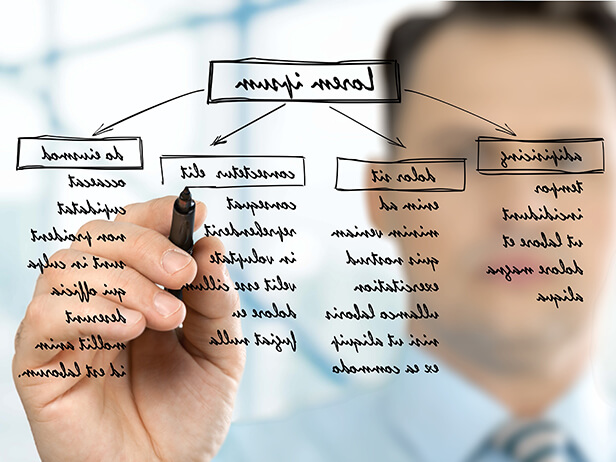
FOCUS is not simply concentration. It is presence with non-judgment, the ability to give undivided attention to what is actually happening in this moment. Focus is the foundational practice. Without it, none of the others hold.
Rafa Nadal talked about how every ball is that ball. Not the game. Not the score. Not the match. This ball, this point, this moment. The discipline he described was not about blocking everything out, it was about returning, again and again, to the present. Every time his attention drifted, he brought it back. The leader who can genuinely be in the room , not half-present, is the leader whose team feels seen, whose decisions are sharper, and whose presence itself becomes a stabilizing force.
LEARNING is the commitment to remain a forever student. Pauline drew on the Buddhist image of the teacup: a cup that is already full cannot receive new tea. Every meeting, every conversation, every setback is an opportunity to pour something in, but only if you arrive empty enough to receive it. But Pauline makes a distinction that most learning conversations miss: it is not simply about learning more. It is about learning in the right way, at the right moment, for the right reasons. Learning that is driven by genuine curiosity and a desire to grow rather than anxiety, comparison, or the pressure to perform, lands differently. It sticks. And the environment in which you learn matters just as much as the content itself. A leader who creates psychological safety gives their team permission to not know, to question, to experiment. That is a culture where real learning and growth becomes possible.
There is also a neuroscience case for making learning a daily non-negotiable. Every time we engage with genuinely new material, a concept, a skill, a perspective we had not encountered before, we stimulate neuroplasticity, the brain’s capacity to form and strengthen new neural pathways. Regular learning increases cognitive reserve, which research consistently links to delayed onset of dementia and age-related cognitive decline.
OWNERSHIP is perhaps the most misunderstood element. Pauline defined it with precision: ownership is not control. Controlling something too tightly is like closing your hand around something and squeezing until there is no air. Nothing can breathe. True ownership is responsibility for the environment, the culture, the conditions that allow a team to do its best work not responsibility for dictating outcomes.
Early in my career at McKinsey, I learned the hard way that holding tightly to outcomes is the surest way to undermine them. The pivot to trust, assuming positive intent, asking what each person needs rather than issuing directives, changed everything about how I led.
WELLBEING is the fourth pillar, and it is where Pauline’s background as a holistic health practitioner speaks most directly. Physical, psychological, emotional, spiritual, and social health, all of it, integrated, treated as a whole rather than as separate boxes to check.
Executives are no different from elite athletes in terms of the demands placed on them. The speed of change, the complexity of decisions, the weight of responsibility for teams and organizations, these require the same standard of physical and mental conditioning that any Olympian would bring to their sport. The difference is that elite athletes have entire support systems built around their performance: coaches, nutritionists, etc. Most executives have a calendar and willpower. If you are not sleeping, not moving, not eating well, not tending to your inner life, you are not operating at your best. You are operating well below it, and your team is absorbing the cost.
The Stakes Are Higher Than We Admit
Here is the context that makes this conversation urgent. Only ~20% of employees are thriving at work. ~60% report being regularly stressed. And ~20% are experiencing burnout. These are not abstract statistics, they are the people sitting in your team meetings, delivering your projects, serving your customers, and quietly deciding whether to stay or go.
Leaders are are one of the most controllable levers of this.
Most leaders are not failing because they lack strategy or intelligence. They are failing, or more often, falling short of who they could be because they are not present. They are reacting rather than responding. They are not aware of their triggers, not attuned to what their body is telling them, not reading the energy of the people around them. They have no bandwidth left for any of it, because they have never been taught that bandwidth is something you build.
Mindfulness does not require stillness. It does not require a retreat or a scheduled session. It is the practice of being aware of your thoughts, your triggers, your body sensations, the room around you, and the people in it. That awareness is available to any leader. It costs nothing except intention.
The data on employee wellbeing tells us the gap between where we are and where we could be is enormous. Closing it starts with leaders who choose, moment to moment, to be conscious. To be present. To lead from that place rather than from the noise.
Learn more about Pauline Leung on LinkedIn.
Listen to the podcast with Ashish and Pauline Leung below, You can also listen on Apple Podcasts.
Access and subscribe to all of the episodes of the Flourishing Edge Podcast here.
Make Flourishing Your Competitive Edge.