Your Mind Is Your Most Valuable Asset
I have spent decades in consulting, working alongside some of the sharpest minds in business. I have studied what separates leaders who thrive from those who merely survive. I have read the research, built frameworks, and had many conversations with leaders about what it means to perform at your best.
So this conversation really landed with me:
I spoke with Sophie MacLaren, mindfulness trainer, leadership consultant, and Visiting Fellow at Oxford University on my Flourishing Edge podcast. Sophie did not discover mindfulness later in life. She was born into it. She has been practicing and teaching since she was nine years old, trained by Tibetan lamas who came West for the first time in the eighties, and has spent decades working with governments, law firms, banks, and Formula 1 teams.
What emerged from our conversation is something I have been sitting with.
The Greatest Asset You Are Not Protecting
Sophie opens every leadership program with a single question: what is your greatest resource?

Most leaders eventually land on the same answer. My mind.
Then she asks a second question. If you took the monetary value of your mind and invested it in a business or a piece of property, how much time would you spend researching that investment? Understanding how it functions, how it flourishes, what makes it fail?
The room goes quiet.
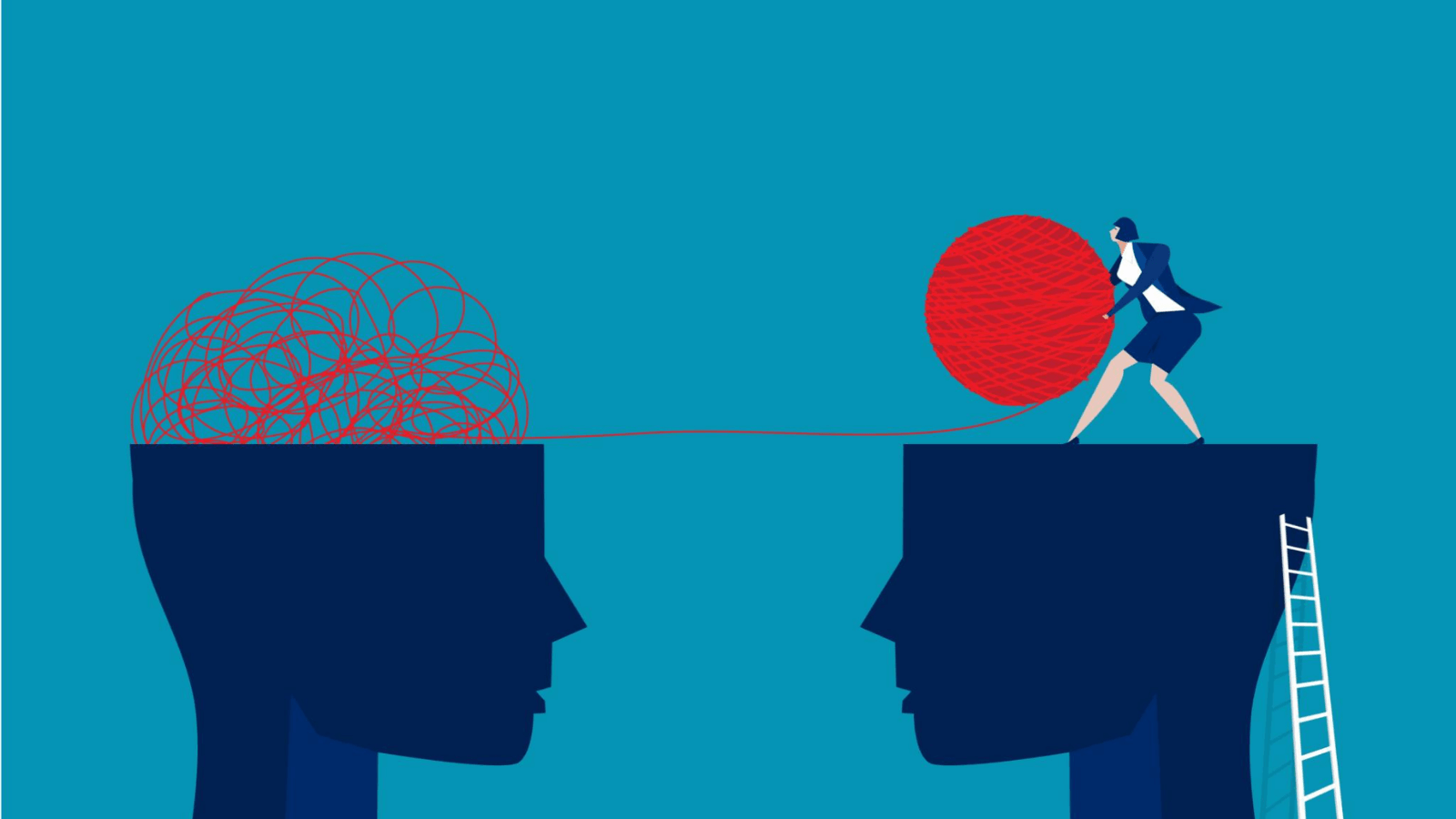
Because here is the uncomfortable truth. We exercise our bodies. We monitor our sleep. We track our steps and our heart rate variability. And yet most of us have no idea how our mind actually works, what impairs it, or what it needs to perform at its best.
Sophie said it plainly: we are not just underutilizing our minds. We are actively impairing them.
The same cognitive capacities we need most right now, long-term thinking, holding complexity, genuine creativity, are the exact capacities being taken offline by overstimulated, stress-flooded nervous systems. She told me about CEOs coming to her saying their teams simply cannot think long-term. They are brilliant in the short term, sharp under pressure. But ask them to think five years out, and something shuts down.
That is not a talent problem. That is a nervous system problem.
What you can do right now: → Ask yourself honestly: what do you invest in your mind compared to your body? → Track one week of your mornings. How does your day actually begin, regulated or reactive? → Notice in your next meeting whether you are in sympathetic or parasympathetic. Your decision quality depends on the answer.
Mindfulness Is Not What You Think It Is
I used to assume mindfulness meant sitting on a cushion, trying to quiet a mind that refused to cooperate. And when I shared that frustration with people, they nodded.
Sophie reframed the entire thing.
She described mindfulness not as a single practice but as an ecosystem of practices — each one cultivating different capacities of mind. Just as physical fitness has running, weights, yoga, and swimming, mindfulness has dozens of entry points. The problem is that when mindfulness went mainstream around 2011, it was standardized and compressed into a generic format, useful, but a pale shadow of what it actually is.
The result? Millions of people tried a breath-following app, decided their mind was too busy, and concluded that mindfulness simply did not work for them.
Sophie’s insight is rooted in neuroscience. Our brains oscillate between the default mode network, the narrative mind, the blah-blah-blah of planning, ruminating, and rehearsing, and the direct experience network, which is activated by sensory absorption. Every time we pull attention back to sensory experience, we are literally retraining the brain. We are building capacity.
This is why the practices are the same, across every country, that leaders use – walking in nature, playing music, sport, etc. They all share one thing in common – they are direct, sensorial experiences that absorb attention.
Your mindfulness practice does not have to look like anyone else’s. It has to work for you.
What you can do right now: → Identify the two or three activities in your life that make you feel restored and present. That is your direct experience network at work. Protect those. → In your next meeting, sit up, feel your feet on the ground, breathe fully. Watch how your thinking shift. → Eat one meal today without a screen. Taste the food. Notice what changes. → On your next walk, leave the podcast off. Let your senses absorb what is around you.
The Most Powerful Person in the Room
There is an idea Sophie shared that I find myself returning to often.
The most powerful person in the room is the most relaxed person in the room.
Not the most prepared. Not the most senior. Not the most analytical. The most relaxed.
Because when your nervous system is regulated, your cognitive architecture is fully available. You can hold complexity. You can see the big picture. You can listen with the kind of quality that makes people feel truly heard. You can make decisions from clarity rather than from fear.
When you are in sympathetic overdrive, which most leaders are for seventy to eighty percent of their working day, the brain’s capacity narrows. It is designed to handle immediate threat. It is not designed to see twenty moves ahead, connect disparate ideas, or hold space for what is uncertain and unknown.
I spent years at McKinsey watching brilliant clients operate in this narrow, reactive mode. We called it high performance. What it actually was is high output at a fraction of their real cognitive capacity.
The regulated leader is not the soft leader. The regulated leader is the most effective leader in the room.
What you can do right now: → Before your next high-stakes meeting, take three slow, full breaths. Activate parasympathetic before the start. → If you wear a wearable, start tracking your nervous system state in meetings. The data will surprise you. → Practice being the stillest person in the room. Notice what that creates in others.
Why Retreats Changed Everything For Me
I used to resist the word retreat. It felt like withdrawal. Like stepping back from the real work.
I was wrong.
My biggest personal transformation, the one that led me to dedicate my life to flourishing and eventually write Hardwired for Happiness, would not have happened without a five-day retreat in Portugal.
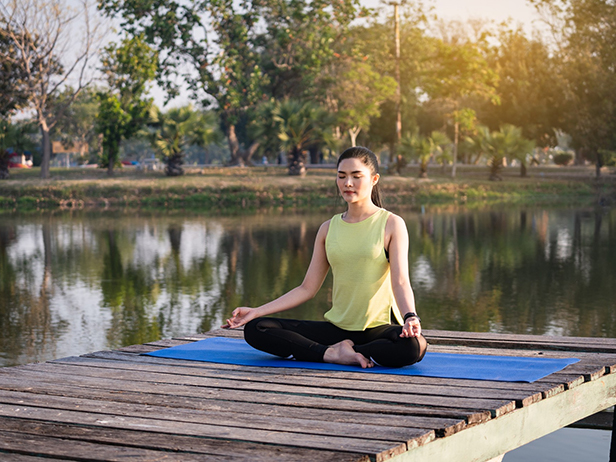
Happiness Squad’s REWIRE program would not exist without a ten-day Vipassana retreat.
Think of our minds as parched earth, cracked, dry, baked by decades of overstimulation. Five minutes of mindfulness is like dropping a few seeds on that hardened ground and walking away. Nothing takes root.
A retreat is the opportunity to dig. To crack open the surface, find the fertile soil that was always there, plant something with care, and give it sustained nourishment. The shift that happens in two, three, or five days of immersive practice is not comparable to months of ten-minute sessions.
What you can do right now: → Block one day this quarter with no meetings, no email, and no agenda. Treat it as a micro-retreat and notice what surfaces. → Research one structured retreat, whether meditation, nature-based, or leadership-focused.
VUCA Is Not the Enemy — It Is the Invitation
Sophie shared a research insight in our conversation that I found genuinely reframing.
She has spent years studying the feminine principle, not as a gender construct, but as an energetic quality that all of us carry. She explored it through neuroscience, mythology, Taoism, Buddhism, indigenous traditions, and alchemical texts. She built charts. She read sixty books.
And then one afternoon, staring at her research, she had a realization.
VUCA – Volatility, Uncertainty, Complexity, Ambiguity – is the feminine principle.
The qualities of VUCA match precisely the qualities associated with the feminine across virtually every tradition and every lens of inquiry. The mystery. The unknown. The fluid. The complex. The volatile.
When we are stuck in dysregulated, over-dominant masculine energy, the drive to control, to fix, to cut through, VUCA becomes a threat. Uncertainty feels dangerous. Complexity feels overwhelming.
But when we cultivate balance, when we bring the spaciousness, the relational intelligence, the capacity to hold what we do not yet understand, VUCA stops being a threat. It becomes the terrain we were built for.
This is not about gender. It is about integration. Men and women alike carry both energies. The question is whether they are in harmony.
In the world we are navigating right now, leaders who can sit with uncertainty, hold complexity, and act from a regulated, spacious place will not just survive VUCA. They will thrive in it.
The Invitation
Your mind is the most valuable asset you have. The evidence for this is not philosophical, it is neurological, organizational, and economic.
If this is truly your greatest asset, the question worth sitting with today is simple: what are you doing to protect it?
Start small and build a sensorial practice.
Go further in the full podcast conversation with Ashish Kothari and Sophie MacLaren on the Flourishing Edge podcast.
Learn more about Sophie MacLaren on LinkedIn.
Listen to the podcast with Ashish and Sophie MacLaren below, You can also listen on Apple Podcasts.
Access and subscribe to all of the episodes of the Flourishing Edge Podcast here.
Make Flourishing Your Competitive Edge.